SaaS Isn't Dying. Its Users Are.
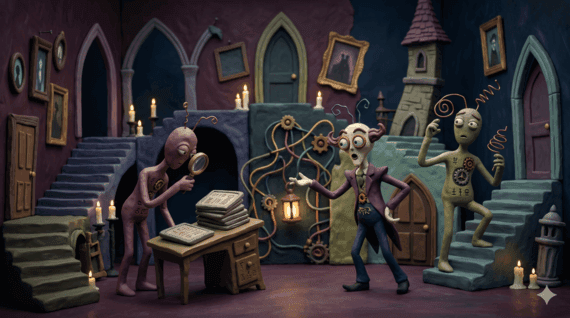
There's a loud argument making the rounds on tech X right now: AI is killing SaaS. The pitch usually goes something like, "Why would anyone pay for a CRM when an agent can just spin one up on demand?" Or, "Vertical SaaS is cooked — LLMs make software disposable."
I think the take is half right and mostly wrong.
SaaS is not dying. The plumbing, the data models, the workflows, the compliance moats and the integrations are alive and well, and arguably more valuable than ever. What's changing is subtler, and in my opinion more interesting: the humans are leaving.
The customers, the contracts and the revenue stay. The people clicking through your dashboards, navigating your nested menus and learning your keyboard shortcuts are the numbers about to drop hard. In their place, something else is logging in: agents.
The "SaaS is dead" argument is lazy
Every few years the same story resurfaces. In 2010 it was "mobile will kill the web." In 2016 it was "chatbots will replace apps." In 2020 it was "no-code will replace SaaS." None of those turned out to be extinction events. They were shifts in the interface layer while the underlying systems kept compounding in value.
AI agents will follow the same pattern. Agents don't replace Salesforce or Stripe, and they don't replace your HRIS, your ticketing system or your data warehouse. Those systems exist because running a business requires state: customer records, transactions, audit trails, permissions, compliance artifacts. An agent doesn't conjure that state out of thin air. It reads and writes to systems that already hold it.
So the useful question is who is pointing a mouse at the screen?
The real shift: users become operators of agents
This is what I think happens over the next 3 to 5 years.
The average SaaS tool today is designed around the assumption that a human opens it 5 to 40 times a week. That human pokes around, runs reports, updates records, responds to notifications, triages an inbox. The whole product is shaped by that rhythm: the onboarding, the UX polish, the gamified dashboards, the "time to first value" metric.
Now watch what happens when agents take over the poking.
- Your sales team doesn't live in the CRM anymore. An agent logs opportunities, drafts follow-ups, and updates stages based on meeting transcripts. A salesperson opens the CRM maybe twice a week to review.
- Your support team doesn't live in the helpdesk. An agent triages, responds to 70% of tickets, and only kicks up the weird ones. Agents read the UI like a human would, but faster and without lunch breaks.
- Your finance person doesn't live in the bookkeeping tool. An agent categorizes, reconciles, and flags anomalies. Month-end close goes from five days to one.
The SaaS is still there. The logo still sits in the browser tab. The subscription still renews. The seat count is where the bloodbath happens.
Agents will click the UI before they use the API
Most people assume agents will consume SaaS exclusively through APIs, which would make the UI irrelevant. That's not what's happening in practice.
A huge percentage of business software doesn't have good APIs. Internal tools, legacy systems, government portals, niche vertical SaaS in insurance or logistics or healthcare: half of it is still locked behind human-first interfaces. And even the SaaS that does have APIs usually exposes maybe 40% of what's actually possible in the UI.
So agents are going to do what humans do: open the browser, log in, click around. Claude in Chrome, Operator, and a growing class of computer-use agents are already doing this today. The interface layer stays, and it becomes the contract that agents bind to instead of humans.
Which creates a weird new design constraint: your UI now has two users, and only one of them has eyes.
What this means if you're building SaaS
If you're a founder right now, four things change.
Per-seat pricing is about to feel very strange. If one human operator runs 15 agents across your product, do you charge for 1 seat or 15? The honest answer is neither. You charge for usage, outcomes, or workflows completed. Pricing models that assumed "1 human = 1 login" are going to get pulled apart.
Your moat shifts from UX polish to data depth and workflow coverage. Agents don't care if your empty state illustration is charming. They care whether your system has the fields, the history, the integrations, and the edge-case handling to get the job done. The companies that invested in boring depth (the long tail of features nobody demoed) are going to look very smart.
You need to ship for two interface modes. A human-readable UI, and a machine-readable surface (APIs, MCP servers, structured action endpoints). The best products will treat agents as first-class users. If you're still shipping without an MCP server in 2026, you're leaving a real distribution channel on the table.
The top of funnel will look different. Fewer free-trial signups, more API-key provisionings. Fewer demo requests, more agent-initiated integrations. Your analytics stack needs to catch up.
What this means if you're a user
On the buyer side, the mental model also shifts.
You'll stop asking "which tool has the best UX for my team?" and start asking "which tool plays best with my agents?" The winners will be the systems that expose their full capability to agents, not just the sliver that fits on a screen.
You'll also buy differently. Instead of onboarding your whole team onto yet another dashboard, you'll onboard one or two operators who manage a small fleet of agents pointed at the tool. Training costs collapse. Seat expansion flattens. The traditional SaaS growth playbook of "land, then expand via seats" stops working.
The unglamorous prediction
I don't think this is a sudden cliff. It's a slow leak. MRR stays flat, logos don't churn, but active user counts fall off for two or three quarters before anyone realizes what happened. The companies that notice early and reprice will be fine. The ones still bragging about DAU in their board decks in 2027 won't be.
SaaS isn't dying. It's getting quieter. The product is still running, the revenue is still coming in, the integrations are still doing their job. The only thing missing is the sound of humans clicking.
I'd call it a new equilibrium rather than a collapse, and I think it's going to be a better one: fewer people trapped in dashboards, more people doing the work that actually needs a human.
The winners will be the builders who see it coming and design for it. The losers will keep optimizing onboarding flows for users who aren't logging in anymore.